Ammonia keeps much of Saudi Arabia's food supply cold. Meat processing plants, poultry farms, dairies, cold stores and beverage factories rely on ammonia refrigeration because it is efficient and environmentally friendly. But ammonia is also toxic, corrosive and extremely cold, and a single leak can put everyone on site at risk within minutes. Ammonia emergency response training makes sure your people know how to prevent a leak, recognise one early and respond safely when it matters most.
At Sustainability Leaders Company (SLC) in Riyadh, we deliver practical, on-site ammonia emergency response training for refrigeration, cold-storage and food processing facilities across the Kingdom.
Why ammonia leaks are so dangerous
Ammonia (refrigerant R717) is stored as a liquid under pressure. When it escapes, it can flash into a large, cold, toxic cloud. Its main hazards are:
- Toxic: it attacks the eyes, throat and lungs. Fluid can build up on the lungs for up to 36 hours after exposure.
- Corrosive: it forms a strong alkali on skin and eyes, causing deep burns and serious eye damage.
- Extremely cold: liquid ammonia boils at −33°C and causes cold burns on contact.
- Flammable in enclosed spaces: it can explode at 15–33.6% in air, for example inside a machinery room.
Ammonia carries an NFPA 704 rating of Health 3, Flammability 1, Instability 0. Its strong smell gives early warning, but people quickly get used to it — so smell is never a reliable guide to safety. The UK workplace exposure limits are just 25 ppm over 8 hours and 35 ppm over 15 minutes, far below levels that can be reached in a leak.
What Saudi regulations and standards expect
Employers in Saudi Arabia have clear duties to protect workers from chemical hazards. Saudi Labour Law requires employers to protect workers and provide suitable protective equipment and training. The MHRSD Occupational Safety and Health Management Regulation requires emergency arrangements, periodic testing of emergency equipment and regular audits. Civil Defense requires fire and life-safety systems to be maintained.
For refrigeration plant, the Saudi Building Code — including SBC 501 (Mechanical) and SBC 801 (Fire) — sets requirements for machinery rooms, gas detection, emergency ventilation and emergency shutdown. These codes refer to internationally recognised ammonia standards such as ANSI/IIAR 2 and ASHRAE 15. Training helps your team understand these requirements and apply them on site.
What our ammonia emergency response training covers
The course combines international best practice with Saudi requirements. It is built around eight modules:
- Understanding ammonia — properties, hazards, health effects, exposure limits and explosive limits.
- Legal and technical framework — Saudi, international and UK requirements, NFPA and the Saudi Building Code.
- Leaks, detection and engineering controls — where leaks start, gas detection, emergency ventilation and isolation systems.
- Emergency response — the emergency plan, raising the alarm, evacuation, hazard zones, ERT roles, rescue and leak control.
- Personal protective equipment — minimum PPE, rating standards, SCBA, chemical suits, donning and doffing, and heat stress.
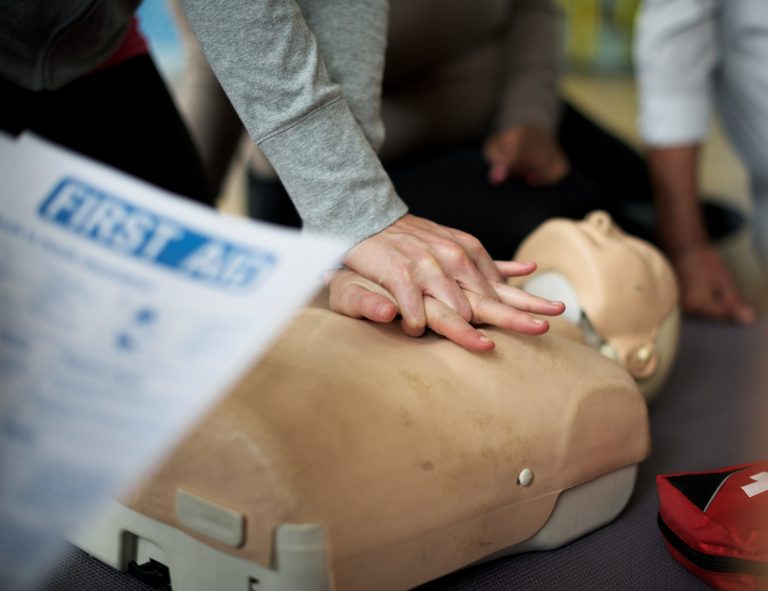
- First aid and decontamination — first aid, casualty decontamination, and protecting product and the environment.
- After the incident — safe re-entry, reporting, investigation and drills.
- Inspection, testing and maintenance — regular and third-party inspection, maintenance plans, periodic tests and calibration.
The training is interactive. It includes case studies of real ammonia incidents, a tabletop emergency scenario and a site compliance checklist your team can use straight away.
Benefits of ammonia safety training for your company
- Protect lives: staff who recognise a leak and act correctly in the first critical minutes.
- Meet legal duties: support compliance with Saudi Labour Law, MHRSD OSH rules, Civil Defense and the Saudi Building Code.
- Prevent incidents: better understanding of leak sources, engineering controls, inspection and maintenance.
- A ready emergency response team: clear roles, correct use of SCBA and PPE, and safe rescue.
- Protect product and reputation: plans for product quarantine, the environment and a safe return to production.
- Be audit-ready: practical checklists, an inspection schedule and records guidance.
Who should attend
The course is designed for emergency response team members, refrigeration and maintenance technicians, plant managers and engineers, production supervisors, HSE staff and fire wardens, and first aiders and security personnel. It suits any facility that uses ammonia refrigeration — especially meat, poultry, dairy, beverage and cold-storage operations.
Why choose SLC
SLC is a Riyadh-based health and safety training and consultancy company. Alongside internationally recognised NEBOSH courses, we design specialist training around the real hazards of our clients' sites. Our ammonia emergency response training is delivered on-site at your facility, tailored to your plant and emergency plan, and every participant receives an SLC certificate of completion.
Frequently asked questions
What is ammonia emergency response training?
It is training that prepares workers and emergency response teams to prevent, detect and respond safely to ammonia leaks. It covers ammonia hazards, alarms, evacuation, PPE and SCBA, first aid, decontamination and recovery after an incident.
Who needs ammonia safety training in Saudi Arabia?
Anyone who works at or near ammonia refrigeration plant: emergency response teams, refrigeration and maintenance technicians, supervisors, HSE staff, first aiders and security. All staff on site benefit from awareness of alarms and evacuation.
Is ammonia emergency response training required by law in Saudi Arabia?
Saudi Labour Law and the MHRSD OSH Management Regulation require employers to protect workers, prepare for emergencies and train workers in the use of protective equipment. Training is the practical way to meet these duties for ammonia plant.
What PPE is needed for an ammonia leak?
For emergency entry into an ammonia cloud, responders need positive-pressure self-contained breathing apparatus (SCBA) and a gas-tight chemical suit. Filter masks with ammonia (type K) filters are only for escape or short tasks at known low levels.
How long is the course, and where is it held?
The course runs over one day and is delivered on-site at your facility, so it can be tailored to your plant, your emergency plan and your equipment.
Do participants receive a certificate?
Yes. Every participant who completes the course receives an SLC certificate of completion.
Book ammonia emergency response training for your team
An ammonia leak gives little warning, but a trained team can turn a crisis into a controlled response. Contact SLC to arrange on-site ammonia emergency response training at your facility anywhere in Saudi Arabia.
Sustainability Leaders Company (SLC)
4265 Ghazzah St – Al Wadi District, Riyadh 13313 – 6788, Saudi Arabia
Tel: +966 11 495 8604
Mobile / WhatsApp: +966 50 596 5227 | +966 53 658 1681
Email: admin@slcgrouponline.com
Web: www.slcgrouponline.com
Sources (for the web team)
- UKHSA — Ammonia: health effects, incident management and toxicology: https://www.gov.uk/government/publications/ammonia-properties-incident-management-and-toxicology
- MHRSD — Occupational Safety and Health Management Regulation: https://www.hrsd.gov.sa/sites/default/files/2023-02/161238_0.pdf
- MHRSD — Equipping the work environment (Labour Law Art. 121–123): https://hrsd.gov.sa/en/knowledge-centre/articles/64379
- International Institute of Ammonia Refrigeration (IIAR): https://www.iiar.org