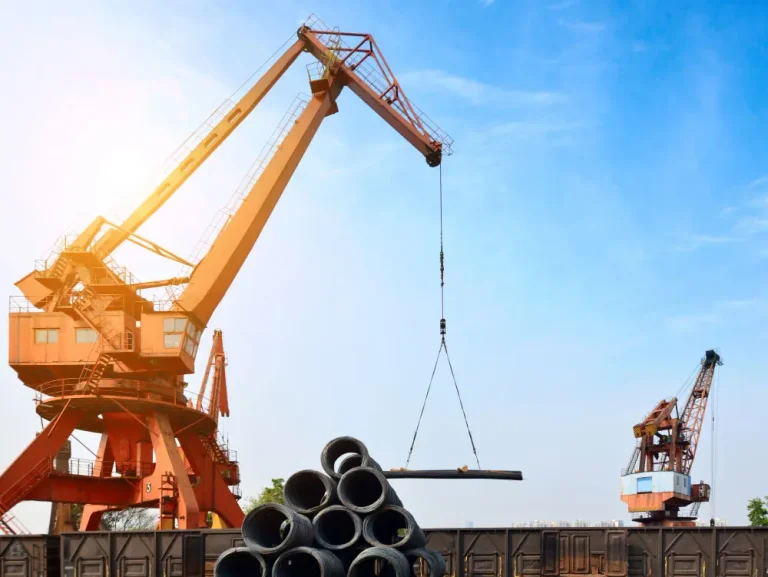
From high-rise towers in Riyadh to giga-projects on the Red Sea, every construction site in the Kingdom depends on temporary works: formwork and falsework, scaffolds, excavation support, crane bases and hoardings. When they fail, the results are often catastrophic. Most failures are not caused by difficult engineering but by poor coordination. Temporary works coordinator training in Saudi Arabia based on BS 5975:2019 prepares your site staff to take control of temporary works from design to removal.
At Sustainability Leaders Company (SLC) in Riyadh, we deliver a practical one-day Temporary Works Coordinator course, applying BS 5975:2019 alongside the Saudi Labor Law, MHRSD requirements and the Saudi Building Code.
What are temporary works?
Temporary works are any parts of the works that allow the permanent works to be built, or that protect, support or give access to them. They may be removed at the end or left in place. Common examples include:
- Support and shaping: falsework, back-propping, needling, wall, column and slab formwork.
- Access: scaffolds, access towers, temporary stairs and edge protection.
- Earth retention: trench boxes, sheet piles, soldier piles and batters.
- Plant foundations: tower crane bases, mobile crane mats and piling platforms.
- Protection and water control: hoardings, crash decks, dewatering and cofferdams.
- Stability: bracing of steel frames and precast elements during erection.
Why temporary works fail
After a series of falsework collapses in the UK in the early 1970s, the Bragg Report (1975) found that most were caused by procedural and coordination failures rather than difficult engineering. Its answer was a single responsible person: the Temporary Works Coordinator. The same root causes are still seen on sites today:
- No design, the wrong design used, or no independent design check.
- Changes made on site without approval — props swapped, ties removed, excavations dug deeper.
- Loading before inspection, or striking formwork too early.
- Weak foundations, missing bracing, and wind or lateral loads ignored.
- Old drawing revisions on site and poor handover between trades.
What BS 5975:2019 requires
BS 5975:2019, the Code of practice for temporary works procedures and the permissible stress design of falsework, sets out a management system for temporary works. Its key elements are:
- Clear roles: a Designated Individual (DI) who owns the system and appoints the TWC in writing; the Temporary Works Coordinator; Temporary Works Supervisors (TWS); and the temporary works designer and design checker.
- A temporary works register: every item listed before it is designed and kept until it is removed.
- A design brief: purpose, loads, ground conditions, interfaces, constraints and the codes to use.
- Design check categories 0 to 3: the more complex the design or serious the consequence, the more independent the check — up to a check by a separate organisation for Category 3.
- Permits to load and to strike: formal hold points, so nothing is loaded before it is inspected or removed before it is safe.
- Change control and records: any change goes back to the designer, and every brief, check, inspection and permit is filed.
Temporary works and Saudi requirements
No Saudi statute names the Temporary Works Coordinator, but the Saudi Labor Law requires employers to take the necessary precautions to protect workers from the hazards of their work and to post safety instructions in Arabic and a language workers understand. The Ministry of Human Resources and Social Development (MHRSD) enforces these rules on site. The Saudi Building Code — including SBC 301 (loads), SBC 303 (soils and foundations), SBC 304 (concrete) and SBC 306 (steel) — gives the design basis for temporary works in the Kingdom. Clients add their own requirements: Saudi Aramco's scaffold rules, and the HSE manuals of giga-project developers and the Royal Commissions, most of which call up BS 5975 and a named TWC.
Saudi conditions also shape every design brief: shamal winds and sandstorms on scaffolds, hoardings and cranes; extreme heat affecting concrete and working hours; flash floods; and sabkha soils with shallow groundwater on coastal sites.
What our temporary works coordinator training covers
The course is built around seven modules:
- Introduction to temporary works — what they are, the range a TWC manages and why the role exists.
- Why temporary works fail — management and technical root causes, and five lessons every TWC carries.
- Standards and Saudi legal framework — BS 5975:2019 and related standards, the Labor Law, MHRSD, the Saudi Building Code and client rules.
- Roles and responsibilities — the DI, TWC, TWS, designer and checker; interfaces, competence and written appointment.
- The temporary works procedure — register, design brief, check categories, RAMS, permits to load and strike, change control, handover and records.
- Practical checks and site conditions — formwork, scaffolds, excavations, propping, crane bases and hoardings, and designing for the Saudi climate.
- Pitfalls, exercises and assessment — common TWC mistakes, a scenario-based group exercise and a knowledge check.
Benefits for your company
- Prevent collapses: temporary works designed, checked and inspected before they carry load.
- Meet legal and client duties: Saudi Labor Law, MHRSD, the Saudi Building Code and client HSE specifications.
- A competent, appointed TWC: a named coordinator with the authority to stop unsafe work.
- Permit control: nothing loaded too soon or struck too early.
- Built for Saudi conditions: wind, sand, heat, floods and sabkha soils covered in every brief.
- Audit-ready records: register, check certificates, inspections and permits ready for clients and inspectors.
Who should attend
The course is designed for temporary works coordinators and supervisors, site and project engineers, construction managers, HSE officers, and scaffold and formwork supervisors — on main contractor and subcontractor teams.
Why choose SLC
SLC is a Riyadh-based health and safety training and consultancy company, accredited by NEBOSH, IOSH, Highfield and the National Safety Council, and by the Technical and Vocational Training Corporation (TVTC) in Saudi Arabia. Our temporary works course links BS 5975 directly to Saudi law, codes and client requirements, uses realistic site scenarios, and every participant receives an SLC certificate of completion.
Frequently asked questions
What is a Temporary Works Coordinator?
A Temporary Works Coordinator (TWC) is the named person on site who makes sure every temporary work is designed, checked, built, inspected, loaded and removed under control. The TWC may delegate tasks but not the responsibility.
What is BS 5975?
BS 5975:2019 is the British code of practice for temporary works procedures and the permissible stress design of falsework. On Saudi projects it is applied through contracts and client HSE specifications as recognised good practice.
Who appoints the TWC?
The Designated Individual — a senior manager in the contractor's organisation — appoints the TWC in writing, setting out the project, scope, limits of authority and the power to stop work.
What are the design check categories?
Category 0 covers standard solutions; Category 1 simple designs checked within the same design team; Category 2 more complex designs checked by someone not involved in the design; and Category 3 complex or innovative designs checked by an independent organisation.
What is a permit to load?
A permit to load is a formal sign-off that a temporary work is complete, inspected and ready to carry load. It names one specific item, one drawing revision and one defined load.
How long is the course, and do participants get a certificate?
The course runs over one full day and is delivered on-site at your facility. Every participant who completes it receives an SLC certificate of completion.
Book temporary works coordinator training for your team
Temporary works collapses are preventable with one named coordinator, a live register and signed permits. Contact SLC to arrange Temporary Works Coordinator training for your project team anywhere in Saudi Arabia.
Sustainability Leaders Company (SLC)
4265 Ghazzah St – Al Wadi District, Riyadh 13313 – 6788, Saudi Arabia
Tel: +966 11 495 8604
Mobile / WhatsApp: +966 50 596 5227 | +966 53 658 1681
Email: admin@slcgrouponline.com
Web: www.slcgrouponline.com
Sources (for the web team)
- BS 5975:2019, Code of practice for temporary works procedures and the permissible stress design of falsework (BSI): https://knowledge.bsigroup.com
- Temporary Works Forum — guidance on temporary works management: https://www.twforum.org.uk
- Saudi Building Code (SBC 301, 303, 304, 306): https://sbc.gov.sa
- MHRSD — Occupational Safety and Health Management Regulation: https://www.hrsd.gov.sa/sites/default/files/2023-02/161238_0.pdf
- SLC course material: Temporary Works Coordinator Training